Fatty liver — India's silent epidemic
Why nearly 1 in 3 Indian adults now has some degree of fatty liver, what it actually means for your health, and the small habits that can reverse it.
Read more →Super-specialty gastroenterology in Meerut — accurate diagnosis, honest advice, and treatment explained in language you can understand.
Dr. Anil Kumar · MBBS, MD (Medicine), DM (Gastroenterology) · 25+ years
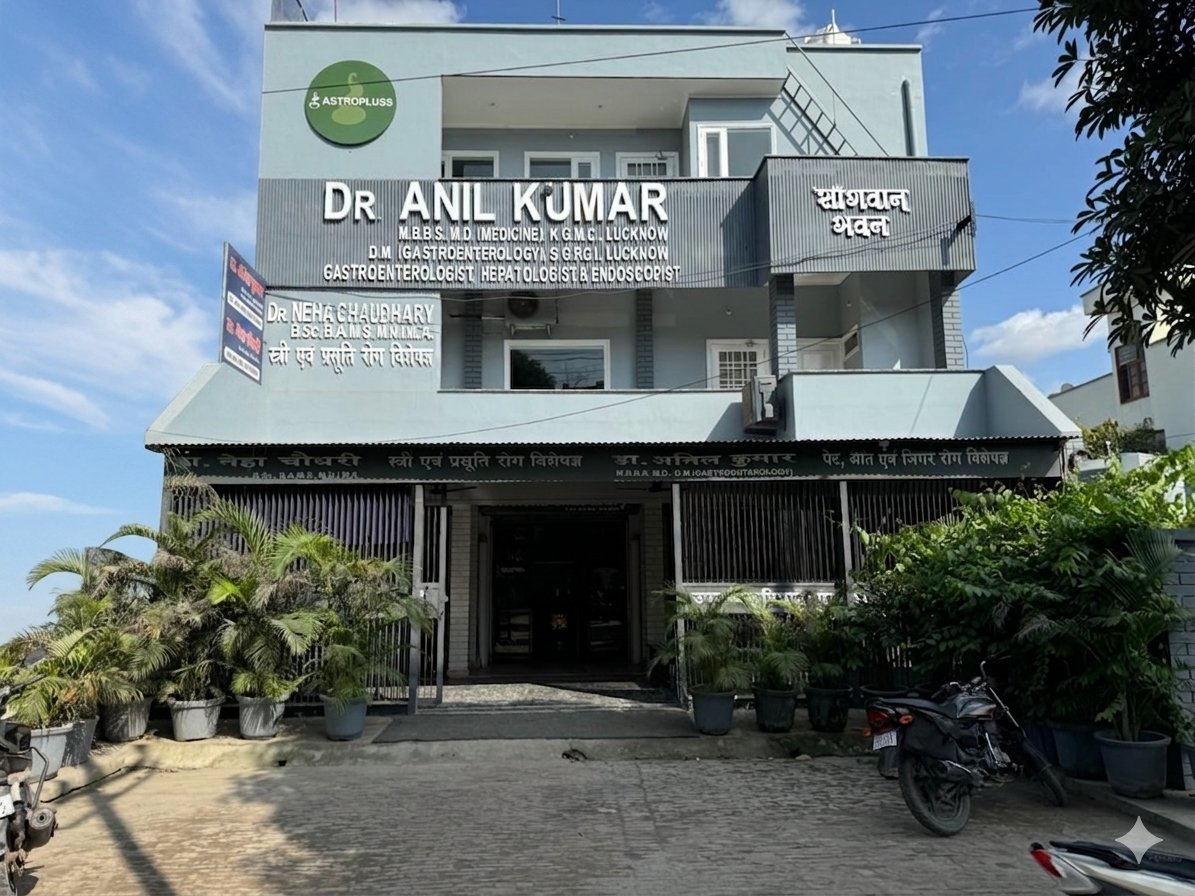
Dr. Anil Kumar is a super-specialist gastroenterologist serving the people of Meerut for more than 25 years. He cares for the complete digestive system — the food pipe, stomach, intestines, liver and pancreas — combining accurate diagnosis with clear, honest guidance.
He completed his MBBS and MD (Medicine) from King George's Medical University (KGMU), Lucknow, followed by his DM in Gastroenterology from the Sanjay Gandhi Postgraduate Institute of Medical Sciences (SGPGI), Lucknow — among the most respected medical institutions in the country. After early experience in Hyderabad, he has practised in Meerut for over two and a half decades.
From everyday digestive trouble to complex liver and pancreas conditions — here are the problems Dr. Anil Kumar treats on an OPD basis.
Heartburn, sour burps and GERD — long-term relief, not just temporary antacids.
Persistent gas, fullness and abdominal discomfort evaluated and managed.
Irritable bowel syndrome, chronic constipation and irregular bowel habits.
Diagnosis and treatment of ulcers and recurring stomach pain.
One of the most common liver problems today — assessed, staged and reversed where possible.
Yellowing of eyes/skin, hepatitis B & C and other liver infections.
Gallbladder stones and related pain — evaluation and onward care.
Acute and chronic inflammation of the pancreas and abdominal pain.
Bleeding, piles, fissures and anal discomfort — sensitively handled.
Inflammatory bowel disease causing long-term diarrhoea and cramps.
Loose motions that won't settle, and unexplained weight loss.
Food sticking, painful swallowing and food-pipe problems.
Painless, day-care diagnostic procedures performed by Dr. Anil Kumar to look directly inside the digestive tract and find the cause of your symptoms.
A thin, flexible camera gently examines the food pipe, stomach and first part of the intestine — helping diagnose acidity, ulcers, swallowing trouble and the cause of stomach pain or bleeding.
A careful examination of the large intestine to investigate persistent loose motions, bleeding, change in bowel habits, and to screen for polyps and early bowel cancer.
Diagnosis, tests and prescribed medicines — all available at GASTROPLUSS, so you don't have to run between three places to begin treatment.
Routine blood tests, liver and kidney function panels, lipid profiles, hepatitis screening, stool examination and infection panels — performed in-house with most reports ready within hours, so treatment can start the same day.
An on-site pharmacy stocking the medications Dr. Anil Kumar prescribes — so you leave with the correct brand and dose, no separate trip to find them. Generic options available where appropriate to keep treatment affordable.
Simple, trustworthy answers to the questions patients ask most. This information is for general awareness — always consult a doctor about your specific problem.
Feeling full, heavy or gassy after meals is common and usually not dangerous — but persistent bloating deserves a check-up.
Eating slowly, avoiding fried and very spicy food, cutting back on cold drinks, and walking after meals often help. If bloating comes with weight loss, vomiting, blood, or doesn't settle over a few weeks, it should be evaluated.
That burning behind the chest after meals is acid reflux. Occasional acidity is normal; frequent acidity is a signal to act.
Smaller meals, not lying down right after eating, raising the head of the bed, and limiting tea, coffee and smoking can reduce reflux. Daily antacid use can hide a more serious problem — long-standing reflux should be assessed.
Fatty liver is now extremely common and often found by chance on ultrasound. The good news: in early stages it is largely reversible.
Gradual weight loss, regular activity, controlling sugar and avoiding alcohol are the cornerstones. Most early fatty liver causes no symptoms, which is exactly why it is missed — a proper assessment tells you which grade it is and what to do next.
Hard, infrequent or difficult stools are common, but constipation that is new or worsening should not be ignored.
Enough water, fibre from fruits and vegetables, and a fixed daily routine help most people. A recent change in bowel habit, blood in the stool, or constipation with weight loss are reasons to see a gastroenterologist.
A colonoscopy isn't only for emergencies — it can catch problems early, before they become serious.
It is worth discussing if you have blood in the stool, a lasting change in bowel habits, unexplained anaemia or weight loss, or a family history of bowel cancer. Early detection of polyps can prevent cancer altogether.
Some digestive symptoms are the body's way of asking for attention. Knowing them helps you seek care in time.
Blood in vomit or stool, black stools, difficulty swallowing, unintended weight loss, yellow eyes or skin, and severe or ongoing abdominal pain all deserve prompt medical evaluation rather than waiting.
You don't need crash diets or magic supplements for a healthy gut and liver. A handful of consistent habits do most of the work. Here are the ones that genuinely help.
Your digestive system thrives on rhythm, fibre and water more than on any expensive supplement.
The liver does the body's heavy lifting. Treat it kindly with what you put on your plate.
The right pace is steady — about half to one kilo a week — and it stays off because the habits stay on.
When you eat matters almost as much as what you eat — for acidity, sleep and weight.
In-depth reads on the digestive and liver problems people ask about most. New articles added regularly — bookmark the page or follow us on Instagram for updates.
Why nearly 1 in 3 Indian adults now has some degree of fatty liver, what it actually means for your health, and the small habits that can reverse it.
Read more →A plain-language guide to who needs the test, what to expect on the day, and how early screening can prevent cancer altogether.
Read more →Cold milk doesn't cure heartburn, antacids aren't harmless if used daily, and other things people tell each other that aren't quite right.
Read more →Reach us by phone — we'll confirm a time that works for you. Online booking is launching soon.
Coming SoonOnline appointment booking — pick a slot, confirm online.
Dr. Anil Kumar consults at two locations in the city. Please call ahead to confirm availability.